

Somatic therapy focuses on the connection between the mind and the body. When we go through stress, trauma, or chronic overwhelm, our bodies often “hold” the tension long before we can name it. Somatic work helps people reconnect with those physical cues so they can feel calmer, more grounded, and more in control.
This is not a separate or alternative approach at our practice. It is one of the tools David may weave into EMDR or traditional therapy when it supports regulation, safety and clarity.

What Somatic Therapy Helps With
People often benefit from somatic strategies when they’re experiencing:
- Anxiety that shows up physically (tight chest, restlessness, racing heart)
- Chronic stress that feels stuck in the body
- Trauma responses like startle, overwhelm, shutdown, or tension
- Emotional experiences that feel “too big” or hard to explain in words
- Trouble grounding during difficult conversations or memories
Somatic work can help clients feel calmer, more present, and more connected to themselves. For some, it becomes the piece that makes the rest of therapy flow more easily.
What Somatic Therapy Looks Like in Sessions (Client-Friendly Explanation)
Somatic therapy simply means we pay attention to what your body is doing when emotions rise.
This might include:
- Noticing where tension shows up
- Slowing down the breath
- Relaxing the shoulders or jaw
- Grounding through movement
- Feeling the difference between activation and calming
- Practicing small strategies that bring your nervous system back online
The work is gentle. It’s paced. And it is always collaborative.
There is no performance, no expectation to “do it right,” and nothing dramatic. It’s awareness and connection- nothing more complicated than that.
Examples of Somatic Techniques David May Use
(All depending on the client, the moment, and what feels supportive)
- Guided breathing and grounding
- Gentle, guided, intentionalmovement or stretching
- Progressive muscle relaxation
- Mindfulness and body scanning
- Bilateral stimulation
- Imagery and visualization
- Walking or movement-based exercises that supports specific regulation
- Regulation strategies that pair well with EMDR
All of these methods help the body shift out of fight-or-flight responses so therapy feels manageable.
This is entirely personalized and different techniques work for different people. David chooses and makes suggestions based on what supports your nervous system, not a fixed protocol.
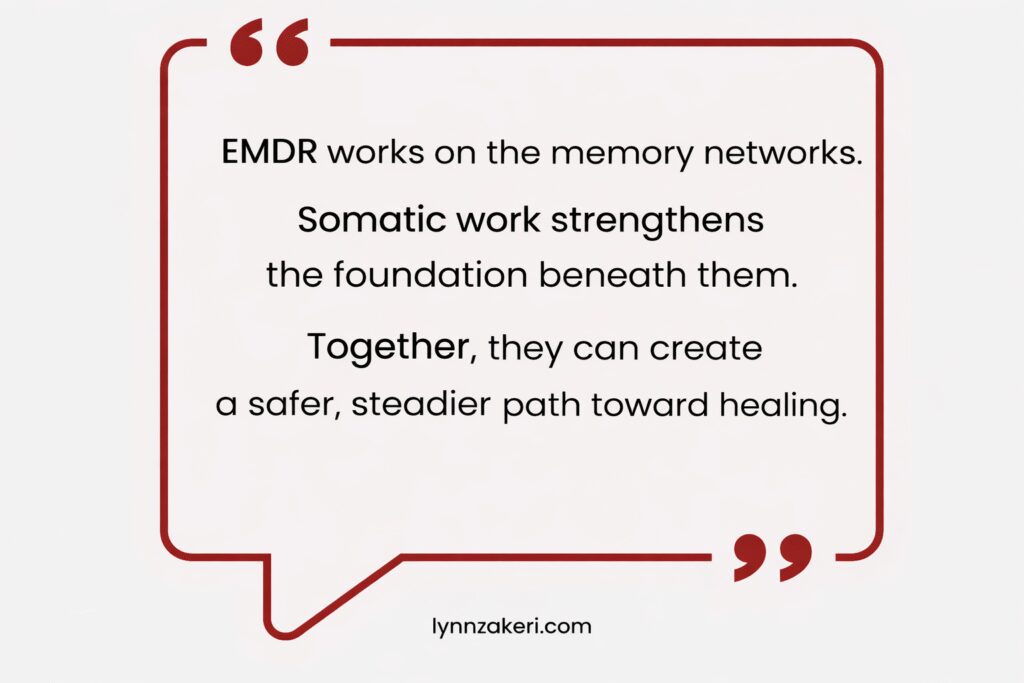
How Somatic Therapy Supports EMDR
Somatic work supports EMDR by helping clients:
- Stay regulated while processing painful material
- Reduce overwhelming feelings when emotions rise
- Stay anchored during difficult memories
- Understand how trauma lives in the body
- Develop confidence in their ability to self-soothe
- Strengthen resilience between sessions
Why This Matters
Some clients describe therapy as “I understand it logically, but my body hasn’t caught up.”
Somatic therapy connects those two pieces.
When your nervous system learns how to settle, therapy becomes:
- Less overwhelming
- Less stuck
- Less confusing
And much more effective.
People often say they feel more capable, calmer, and more themselves.
Who David Works With
Somatic work can support:
- Adults
- Teens
- Children (in age-appropriate ways)
- Parents
- Veterans
- Individuals navigating trauma, anxiety, grief, or chronic stress
- Clients wanting more body-awareness or emotional regulation
It is always used thoughtfully, with no pressure and no intensity beyond what feels safe.
Is Somatic Therapy Right for You?
It might help if you’ve said any of the following:
“I can’t calm down even when I talk myself through it.”
“My brain knows I’m safe, but my body doesn’t believe it.”
“I feel stuck in tension.”
“Talking helps, but I still don’t feel settled.”
“I want to understand what’s happening inside me.”
If these resonate, somatic work can be a helpful addition.
Begin Somatic Therapy or EMDR Support
If you want to understand whether Somatic Therapy, EMDR, or a combination is right for you, we can talk through your options.
Contact Lynn Zakeri, LCSW, and Associates
We can email, text, or schedule a call to help you find the right fit.